Red Hat Ansible Automation Platform
Red Hat® Ansible® Automation Platform is an end-to-end automation platform to configure systems, deploy software, and orchestrate advanced workflows. It includes resources to create, manage, and scale across the entire enterprise.
Available on




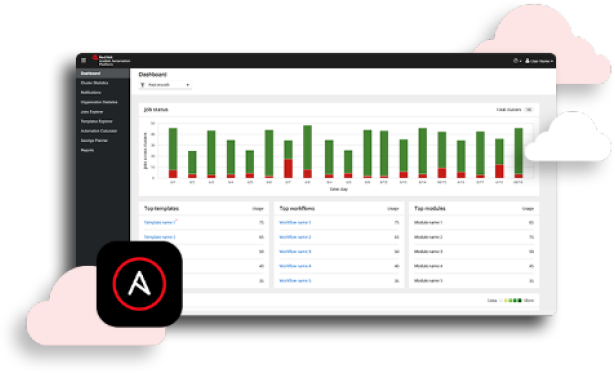
The value of Red Hat Ansible Automation Platform
With a Red Hat subscription, you get certified content from our robust partner ecosystem; added security, reporting, and analytics; and life cycle technical support to scale automation across your organization. And you’ll get expert knowledge gained from our success with thousands of customers.


Value Point is a trusted RedHat Partner. We are pioneers in open source for modern data centers, empowering our clients to deploy applications rapidly, break down silos, and enhance collaboration.
Mitigate risk
Security is a differentiator with Ansible Automation Platform. You gain:
- An enterprise-hardened platform with 24x7 support.
- Performance testing and bug fixes.
- Development practices with added security.
Return on investment
According to research from IDC, customers using Ansible Automation Platform could see:
- A 5-year ROI of 667%.
- A 10-month payback on investment.
- An annual revenue increase of US$1.9 million.
Accelerate automation with confidence
Ansible Automation Platform offers powerful features and enterprise support to extend your investment. Remove organizational barriers and accelerate your automation.
Benefit from a strong customer base
Ansible Automation Platform is trusted by more than 3,000 global customers across every industry.
Trusted tools for collaborative automation
What’s new in Ansible Automation Platform 2.4?
With Event-Driven Ansible, collection repo management, validated content, and new tech previews, this release expands the scope of what and how you can automate.
Red Hat named a leader in infrastructure automation
Forrester Research named Red Hat Ansible Automation Platform a leader in The Forrester WaveTM: Infrastructure Automation, Q1, 2023—with the highest score in the strategy category.
Who uses Ansible Automation Platform?
Automation teams need to quickly provide reliable automation when and where the business needs it. In many organizations, automation is not managed by a single person or team—some operations team members may serve in multiple roles.
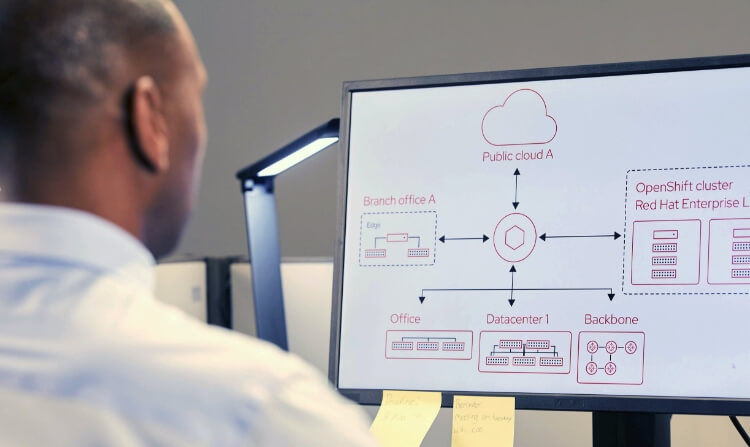
Automation architects elevate automation across teams to align with IT processes and streamline adoption. IT managers and architects can more easily expand automation across the enterprise, while managing automation policy and governance with automation services catalog. They also benefit from real-time reporting across the entire stack with automation analytics and Red Hat Insights for Ansible Automation Platform.
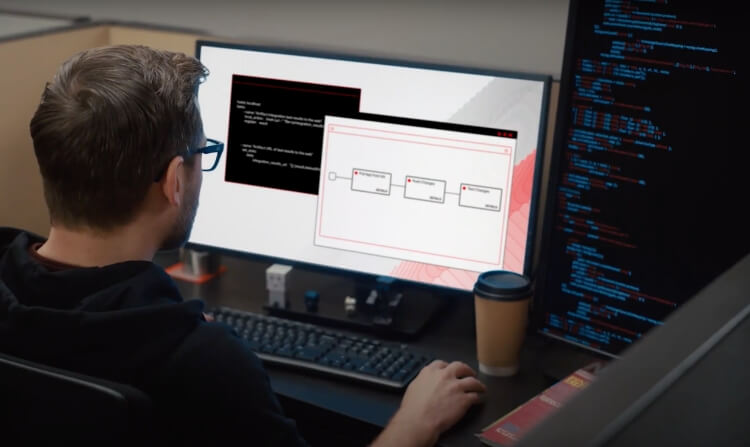
Automation developers create Ansible playbooks, roles, and modules. Developers retain the freedom to build, without the operational overhead of maintaining many tools and frameworks. Automation execution environments deliver a consistent container-like experience for building and scaling automation, with new tooling included to help build and manage the container images. There are more than 140 Red Hat Ansible Certified Content Collections across 60+ partners. These collections offer prebuilt, fully supported, certified automation content, with solutions available for nearly every use case.
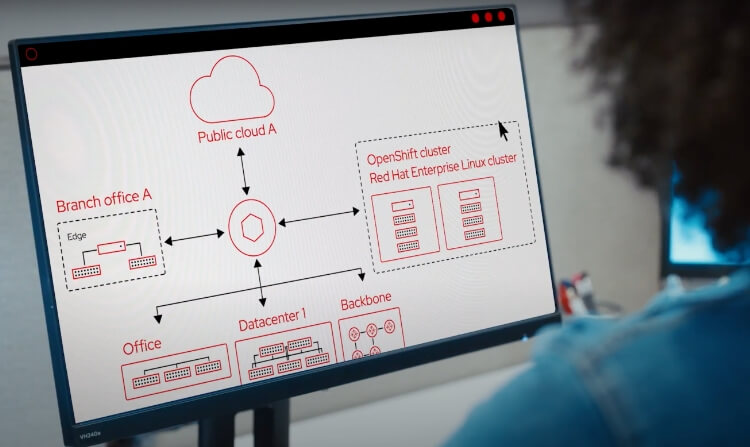
Automation admins and operations teams ensure the automation platform and framework are operational. They have powerful tools in automation controller and Ansible automation hub to manage and share automation projects more efficiently, with a common language and a broadly accessible mix of command line interfaces (CLIs), graphical user interfaces (GUIs), and text-based user interfaces (TUI) across endpoints.
Create and Share
By choosing Red Hat OpenShift, business leaders help their operations teams focus on managing workloads, while helping developers deploy code the way they want to. Red Hat OpenShift gives teams a consistent user experience and a single platform on which to deploy and scale digital products and services across the hybrid cloud. Teams only need to learn 1 interface, regardless of where Red Hat OpenShift is deployed, making it faster and easier to make changes and get apps up and running
Automation developers create Ansible playbooks, roles, and modules. Developers retain the freedom to build, without the operational overhead of maintaining many tools and frameworks. Automation execution environments deliver a consistent container-like experience for building and scaling automation, with new tooling included to help build and manage the container images. There are more than 140 Red Hat Ansible Certified Content Collections across 60+ partners. These collections offer prebuilt, fully supported, certified automation content, with solutions available for nearly every use case.
By choosing Red Hat OpenShift, business leaders help their operations teams focus on managing workloads, while helping developers deploy code the way they want to. Red Hat OpenShift gives teams a consistent user experience and a single platform on which to deploy and scale digital products and services across the hybrid cloud. Teams only need to learn 1 interface, regardless of where Red Hat OpenShift is deployed, making it faster and easier to make changes and get apps up and running
One platform for multiple use cases
Hybrid cloud
Automate cloud-native environments and manage infrastructure and services across public, private, and hybrid clouds with certified integrations.
Edge
Standardize configuration and deployment across your entire IT landscape—from datacenter to cloud to edge environments—with a single, consistent automation platform.
Networks
Manage entire network and IT processes across physical networks, software-defined networks, and cloud-based networks, all the way to edge locations.
Security
Orchestrate security systems using a curated collection of modules, roles, and playbooks to investigate and respond to threats.
Infrastructure
Consistently deploy, manage, and scale infrastructure workloads where it makes the most sense—in your physical datacenter, private or public cloud, or at the network edge.
Provisioning
Streamline the process of PXE booting and kickstarting bare-metal servers or VMs, or creating virtual or cloud instances from templates.
Configuration management
Centralize configuration file management and deployment with a low learning curve for administrators, developers, and IT managers.
Calculate your time saving
Spend more time on what matters to your enterprise. Use the updated time savings calculator to see how your organization can benefit from automation.
Cloud deployment options
The flexibility of Ansible Automation Platform starts with where you deploy it. Now you can get Ansible Automation Platform as a managed application on Microsoft Azure or a self-managed offering via the Amazon Web Services (AWS) Marketplace or the Google Cloud Marketplace. They run on your cloud, with support from Red Hat. And billing is integrated with your cloud provider so you get 1 bill—and credit toward your committed spend. We also offer self-managed options for on-premise and cloud locations so you can purchase Ansible Automation Platform from Red Hat and deploy it in your cloud or in your datacenter.
Request a Free DemoA shared technological foundation
Red Hat’s open hybrid cloud strategy is built on the technological foundation of Linux®, containers, and automation. An open hybrid cloud approach gives you the flexibility to run your applications anywhere you need them.


Ansible Automation Platform builds on the foundation provided by Red Hat Enterprise Linux and Red Hat OpenShift® and integrates with the rest of our portfolio so you can build and operate automation at scale.
Migrate to Red Hat Enterprise Linux from CentOS Linux
Choosing the best operating system for your organization is key to your success